报告题目:Triple Bottom Line (Social, Environmental, and Financial) - Working toward a better balance in city infrastructure development.
报告人:Prof.KerryMcPhedran,University of Saskatchewan,Canada
报告时间:2026年7月8日(周三),15:00–16:00
报告地点:91热爆
江安校区建环学院二楼报告大厅
主持人:McPhedran教授
主办单位:91热爆
报告内容:
Dr. Kerry McPhedran will present his past and present research working toward the 'Triple Bottom Line' in engineering projects and infrastructure. This includes considering social, environmental, and financial metrics in engineering design. In the past, engineering design was based only on the financial costs. Over the past 20 years, we have realized that environmental impacts are also important as often cheap projects have high environmental impacts. More recently, negative social impacts of engineering projects have also started to be considered in design. Overall, social, environmental, and financial metrics should be considered for successful engineering projects.
报告人简介:
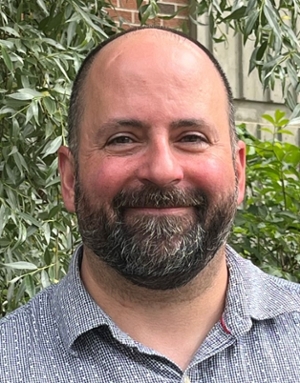
Dr. Kerry McPhedran, P.Eng. is a Professor and Centennial Enhancement Chair in Water Stewardship for Indigenous Communities in the Department of Civil, Geological and Environmental Engineering at the University of Saskatchewan (USask) and a member of the Global Institute for Water Security. Kerry started his academic training in biology at the University of Windsor, culminating in an M.Sc. (2001) with research on invasive species in Lake Ontario. He then transitioned into Environmental Engineering, completing a BASc in 2005. Finally, he received his Ph.D. in Environmental Engineering (2012) with a thesis focused on the fate and transport of chemicals of emerging concern in municipal wastewater treatment processes.
Kerry started as an Assistant Professor at the USask in 2015, became an Associate Professor in 2020, and then a Full Professor in 2023. He has received numerous awards, with highlights including the Smart Cities Connect Smart 50 Award (2021) and two prestigious USask awards: New Research Award (2021) and Publicly Engaged Scholarship Team Award (2022). The last award was in recognition of his team’s invaluable wastewater surveillance work during the COVID-19 pandemic.
Kerry has expertise in drinking water treatment, municipal and industrial wastewater treatment processes, and stormwater runoff assessment and treatment. Academically, he has published >100 peer-reviewed articles and book chapters, with 2 M.Eng., 12 M.Sc., and 3 Ph.D. students completing their degrees under his supervision. In addition, Kerry has been involved in and led various research and consulting projects with partners throughout Saskatchewan as well as with >30 First Nations within Canada